Define the operation
Share the process step, product variants and current constraints.
 NERVECT
WHAT WE DO
Robotics, software and engineering questions for wire harness manufacturing.
From wire presentation to controlled movement and assembly interfaces, the production context determines what is worth investigating. These visual studies make that conversation tangible.
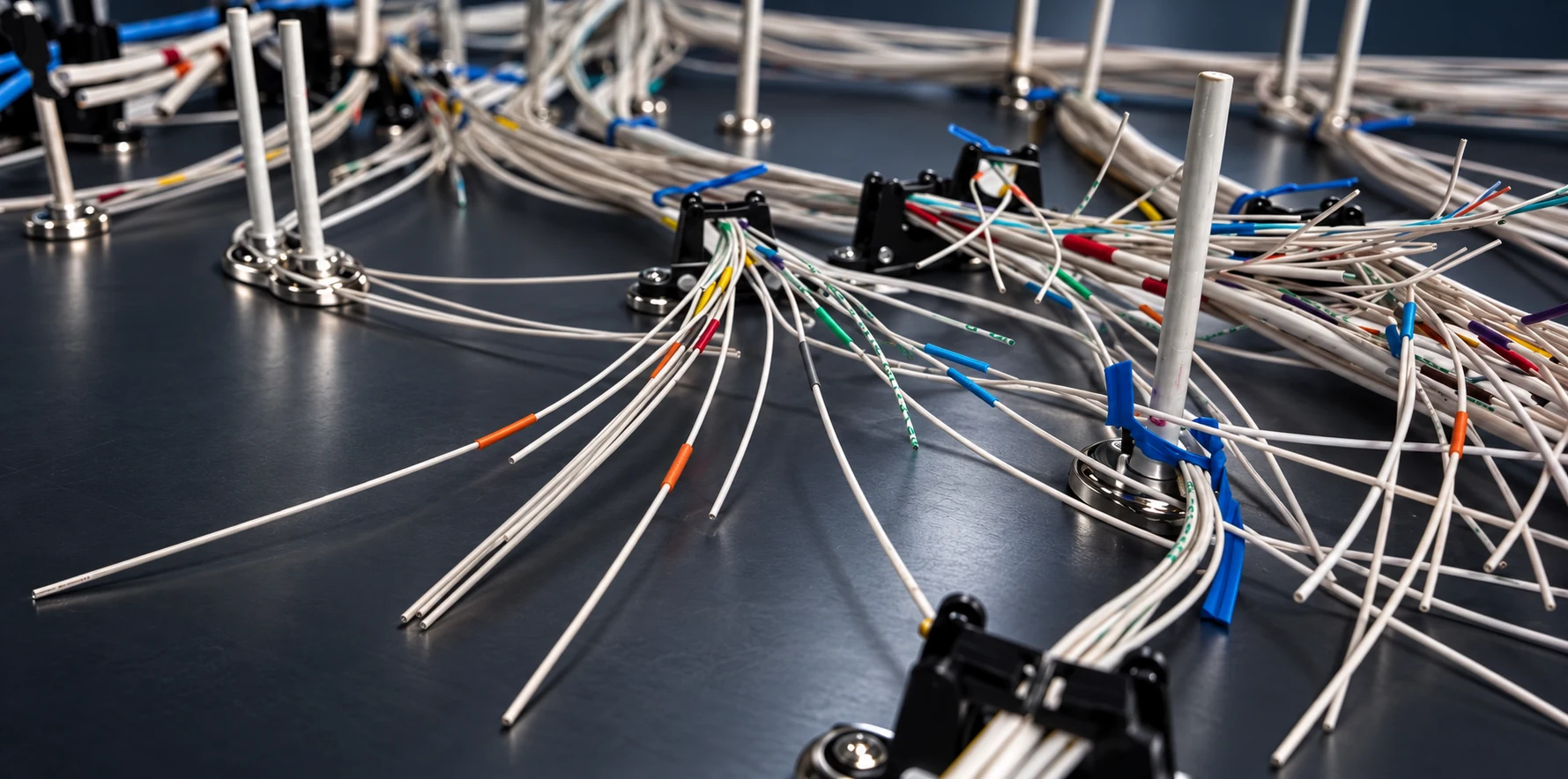
01 / WIRE HANDLING & FIXTURES
A wire harness fixture brings the product and the assembly sequence into the same view. Routing, access and the way wires are supported influence the next handling step.
For a first discussion, describe the harness families, the operation and what varies between products. We can then identify which assumptions an automation trial needs to examine.
Which manual step would you like to investigate first?
02 / CONTROLLED MOTION
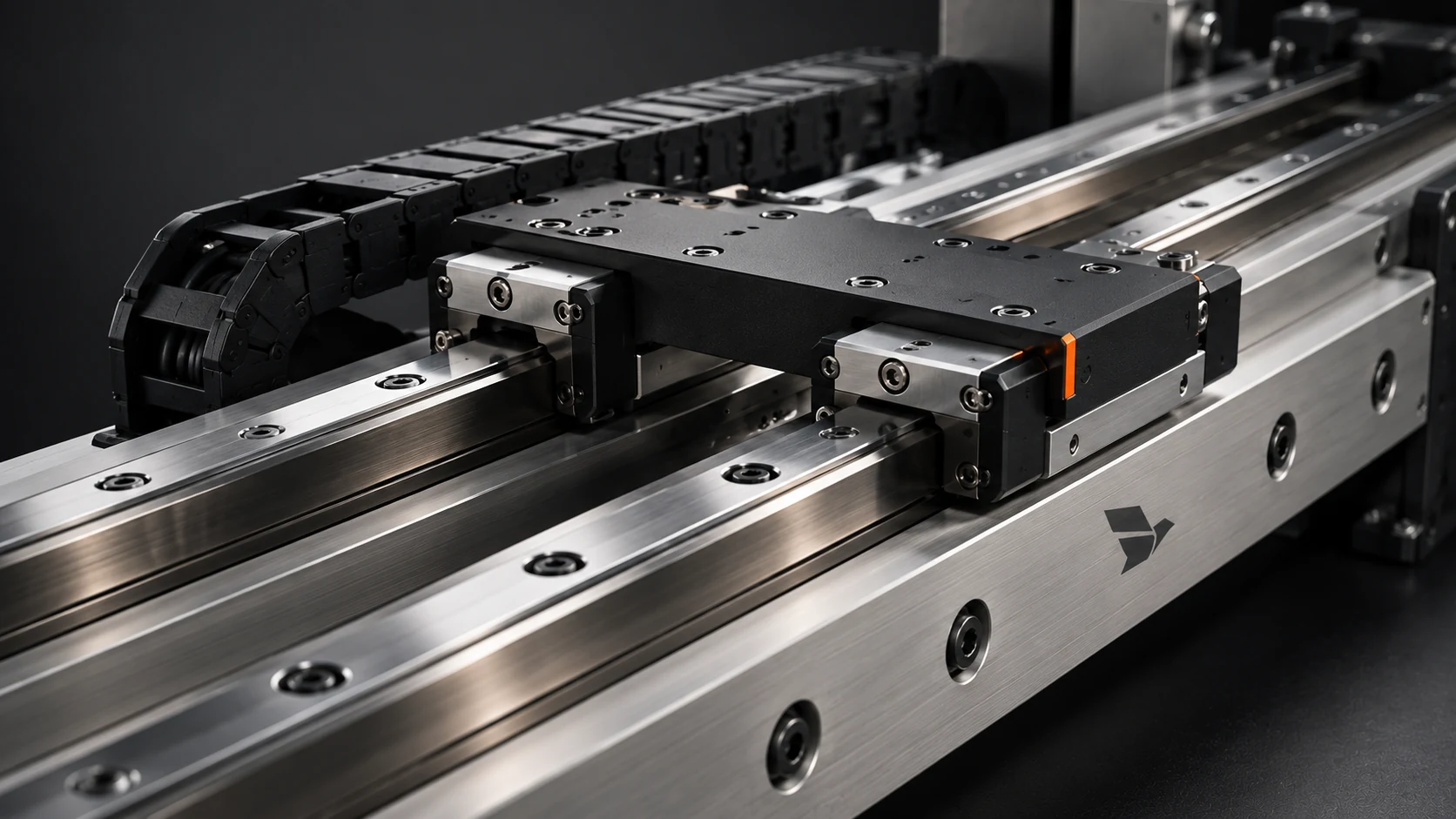
A linear motion study helps frame questions about transfer, positioning and the interface with the next operation. The mechanism only has value when it fits the production task.
Consider how a part arrives, how it is located, and what the following station needs. We discuss those handovers before assigning performance targets.
Where does a repeatable movement become a production constraint?
03 / MECHANICAL INTERFACES
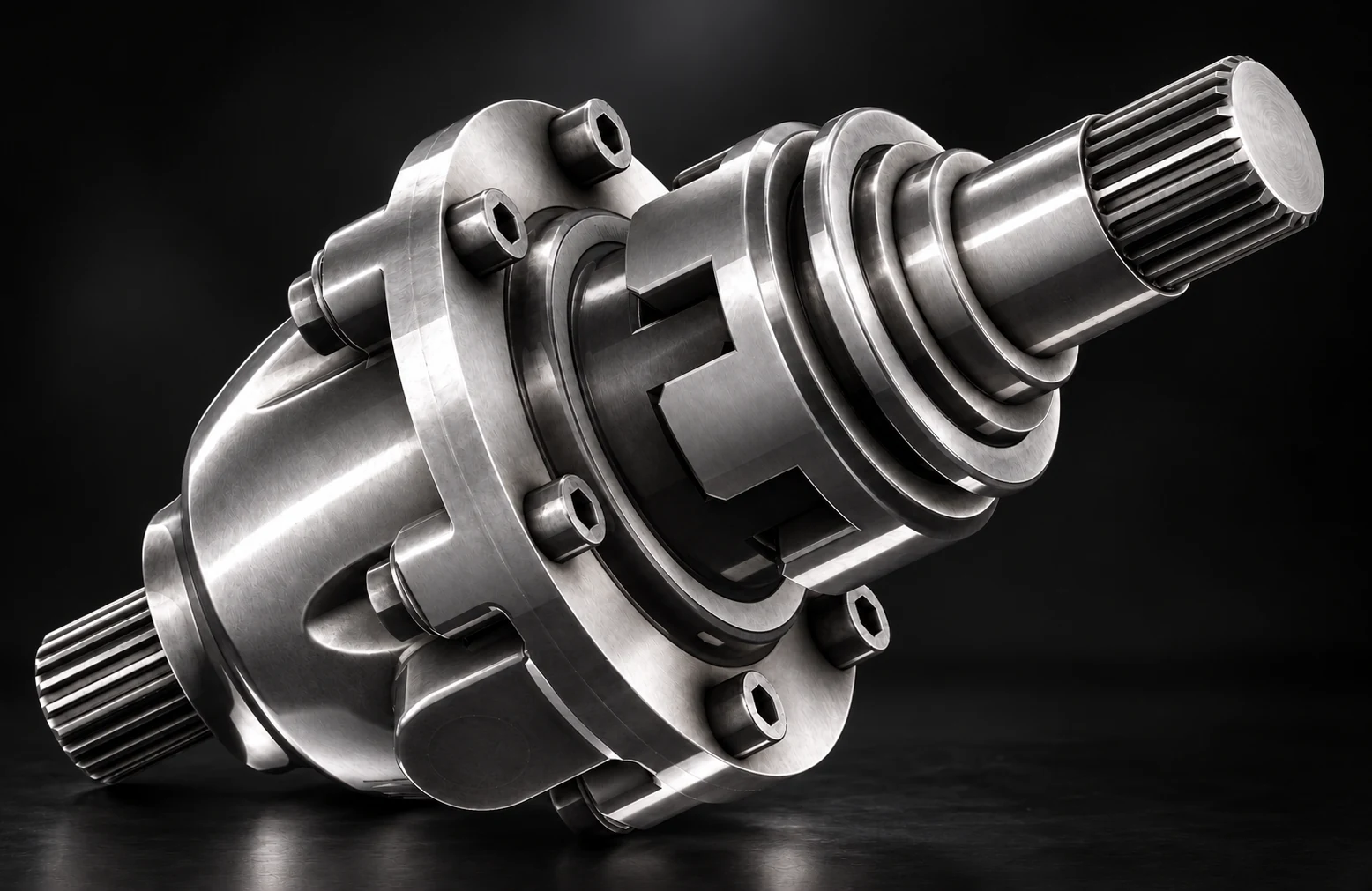
The relationship between components can make assembly, access and maintenance easier or more demanding. A product view helps identify which interfaces deserve attention.
These mechanical visuals support the conversation. They are not an offer of a standard component or a claim that a specific machine is already available.
Which interfaces constrain the automation approach?
04 / ASSEMBLY RELATIONSHIPS
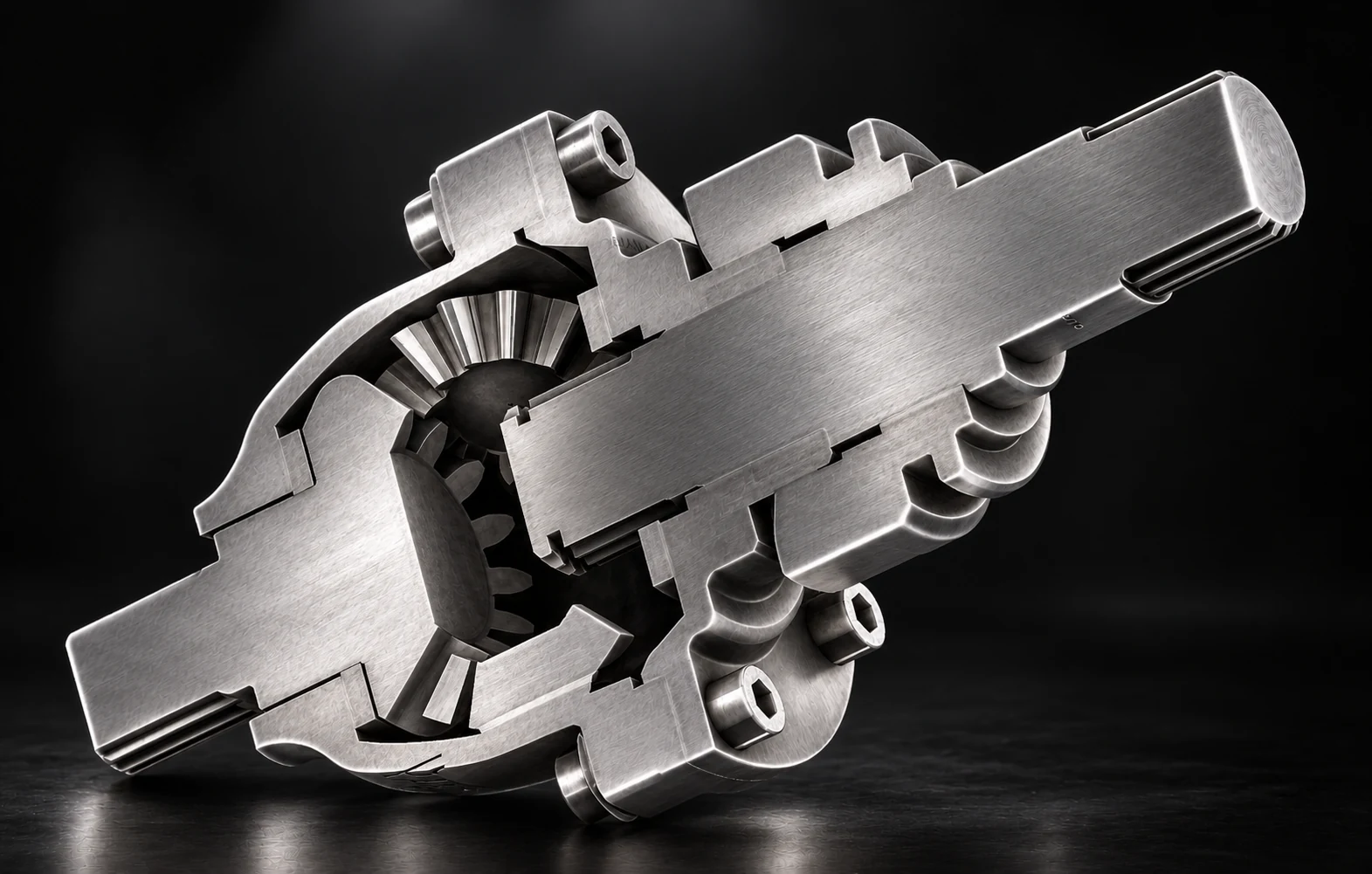
A sectional view makes component relationships easier to discuss. It can reveal questions about access and assembly order that a complete view leaves open.
The next step is to agree what must be demonstrated for your application: process boundaries, variants and assembly criteria, using the appropriate project information.
What would a useful first trial need to demonstrate?
A USEFUL NEXT STEP
Share the process step, product variants and current constraints.
Connect handling, software interfaces and assembly requirements.
Specify what needs to be demonstrated before choosing a next step.
START A CONVERSATION
Describe the wire harness production step, the main constraint and what you would like to investigate. Keep the first message non-confidential.
Discuss your project